堡垒之影

In partnership with Commonwealth Foundation, Granta presents the regional winners of the 2026 Commonwealth Short Story Prize. John Edward DeMicoli’s story is the winning entry from Canada and Europe.
Since 2012 Granta has hosted the winners of the Commonwealth Short Story Prize on our website. Granta editors were not involved with these stories or their selection beyond copy-editing them upon receipt. This year, there has been speculation that some of the stories may have been at least partially AI-generated. The suggestion that writers have submitted material not authentically their own is a charge we take seriously, but until definite evidence comes to light we will keep these stories on our website.
Marlene liked to cut through the Upper Barrakka Gardens after work. She told herself it was because the shortcut saved five minutes, but really the apartment waited with its familiar rituals. There would be her mother’s texts glowing on the screen (Eat something. Don’t skip the fruit), a half-played voice note heavy with sighs, the kettle’s small complaint. Some evenings she preferred the city.
At noon the gardens filled with tourists clustering by the cannon, phones raised like shields. When the gun thundered, their shouts bounced off the bastions, the echo rolling down into the harbour. The sea answered with a crash against the breakwater. But in the evenings, when the gardeners locked the gates behind her, the bastions shifted. The air grew still, as if the city were holding its breath.
Her grandfather used to say that limestone remembered, but only because someone first pressed a memory into it. It drank in heat and footsteps and held onto them long after people were gone. ‘That’s why the stones are warm at night,’ he told her once, when she was seven and still small enough for him to lift her onto the rampart. He pressed her palm against the wall until she pulled it back with a squeal. ‘The knights are still in there. Listening back.’ She had laughed then, but tonight, with the sea black and endless below, she almost believed him; the stone beneath her hand still held warmth.
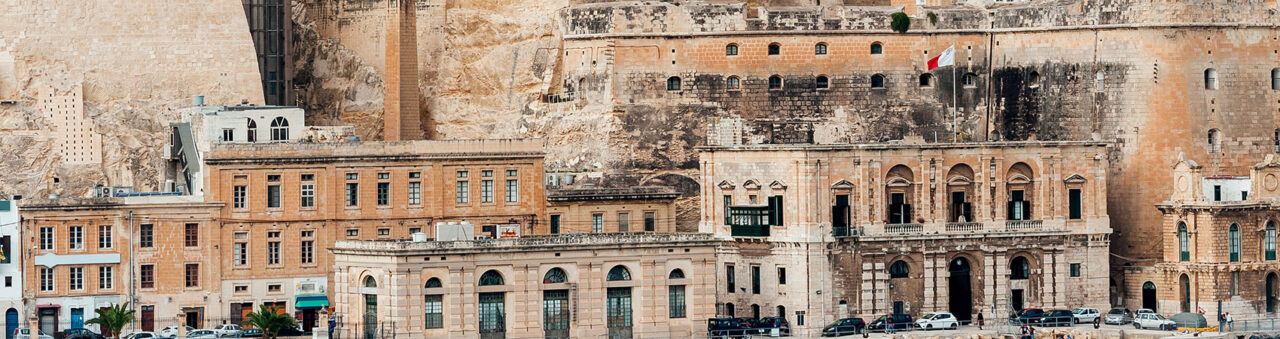
Valletta had always been a place of layers. A Renaissance city built in 1566 by the Order of St John on the Sciberras Peninsula, over earlier fortifications and settlements. Cathedrals replaced older chapels, palaces were built from the rubble of past defences, and the streets thickened with buildings marked by the imprint of successive rulers. Today, those layers remain visible in unexpected ways: a jazz bar tucked inside what had once been an arsenal, a café beneath vaulted stone arches, a museum hidden in a former palace. Yet lately, the changes have felt sharper, harder to absorb, as the weight of history collides with the pace of the present.
A boutique hotel had opened next to her mother’s flat, glass lifts gleaming where laundry lines once hung. The old grocery with its cloudy jars of capers had become a fusion restaurant where no one spoke Maltese. Some nights she thought of the city itself as a case file: names written, erased, written again. In the NGO’s narrow office above Strait Street, she sat most days at a flickering laptop, typing case notes for men and women who had crossed the sea in rubber dinghies. Their names were sometimes guesses, their stories impossible to forget. Some days she feared she was less a worker than a ledger, walking on two legs: a body recording names, not keeping people safe.
That evening, the file on her desk belonged to a boy, fifteen, found clinging to the hull of a capsized boat. The coast guard note was spare: blue jacket, stiff with salt, left sleeve torn. For days the boy had said nothing, only pointed east, as if the word home had sunk with the others. Someone had written on the folder cover – Amir? – with a casual doubt she hated.
Marlene closed the file and shut her eyes. The night was damp, and the limestone walls of the office seemed to sweat salt, as if even stone had begun to carry the stories it couldn’t release. In a meeting earlier that day, her supervisor had said ‘capacity’ twice in one sentence and ‘policy guidance’ three times. She had written in the margin, too hard, too dark: names are not policy.
She walked home through the quiet city. At St John’s Co-Cathedral the statues seemed to glow from within, pale outlines against the dark. At the bastion wall she heard something – a scrape, a whisper. She told herself it was the wind pushing through the gun loops. But she stopped and turned. She thought she saw a man at the parapet – or maybe the light bent that way.
The longer she looked, the sharper his outline seemed: a black tunic, belted at the waist, hands folded as if in prayer. For a moment, time buckled. His eyes, when they found hers, held the stillness of carved stone.
‘You, you guard the walls still?’ she asked, the words rising before she could stop them.
The man tilted his head. Behind him, the sea shivered silver.
‘We listened,’ he said, voice like rope dragged over stone. ‘We listened until the sick could sleep, until the hungry could taste bread. We listened so their names would not leave the air, even when their bodies did.’
She gestured to the harbour’s dark mouth. ‘What is a wall for?’
‘For noticing,’ he said. ‘A wall sees who arrives. It tends names the way we once tended wounds. That’s what your nannu said, wasn’t it? That the stones remember.’
A smell rose in her mind then – herbs, vinegar, the bite of bandages – as if his words had carried the hospital with them.
She wanted to answer, but the words tangled. Was she speaking with one of the old Hospitallers, one of the knights who had once tended the sick within these walls, or only with her own hunger to believe the city could still guard something?
When she blinked, the wall was only wall again.
Marlene pressed both palms to the limestone. It burned against her skin though the night was cool. Far below, a siren wailed – coast guard, another boat slipping through the harbour’s black throat. Once, guns had thundered from these ramparts. Now it was sirens that measured danger.
Her grandfather’s voice: the stones remember.
If walls could hold centuries of sieges, could they hold the grief of the present? Could they remember not only defenders, but the fragile names of those still arriving?
She stayed until the siren faded, her hands hot against the stone, listening for whatever the walls might tell her.
At the shelter the next morning, the boy sat cross-legged on a cot, his back to the window. The sweater they’d given him was too large; he had folded the sleeves with the neat care of someone used to mending things. On the table beside him sat a plastic glass of mint tea, cooling, untouched. The steam had gone, but the scent lingered in the room. He silently cupped the glass without drinking, turning the warmth in his hands. The consent form she had left the night before was still there, unsigned, but not pushed away.
‘ Bonġu ,’ Marlene said softly. Then, more carefully, ‘Good morning.’
His gaze met hers but slipped off again, as if even his eyes were still searching for somewhere to land. She set something small on the blanket: a piece of limestone, worn smooth by years of her grandfather’s fingers. She carried it now in her bag, heavy as a charm.
‘My nannu,’ she said, tapping her chest, then touching the stone. ‘He worked the docks.’ She mimed hauling ropes, squinting against the sun. She touched the stone again. ‘He said stones remember.’
The boy looked from her face to the stone, then back again. Slowly, he stretched out a hand. She passed it to him. He turned it in his palm, weighing it. With his thumb he began to trace faint lines. A curve appeared, then another, like a coastline pressed into the stone. He didn’t look down, as if the memory lived in his body and not in his eyes.
‘Is that where you lived?’ she asked.
He said nothing. He drew a small circle off the coast, a dot that he smudged outward – a boat.
When he slid the stone back across the blanket, his sleeve fell back, and she saw the ridge of a cut running from his wrist to his elbow. She said nothing. She only took the consent form and slipped it into a fresh folder. The one with a question mark she pushed away.
She closed the folder and said, ‘We’ll go to the doctor. Then to the interview. Step by step.’ She spoke in English, then repeated herself in Maltese. She knew he didn’t understand, but the rhythm of her own language carried something steady, like a lullaby.
At the door he spoke for the first time. His voice was hoarse, but the word was clean, exact.
‘Tea.’
He said it as though he had been holding it all morning, turning it over like a coin in his mouth. Not surrender, not invitation – only a word, alive and whole, offered into the room.
The city wore festa that week. Saints were carried out of their churches on shoulders, and fireworks stitched the night with white scars across the sky. Smoke from grills clung to people’s clothes. The streets throbbed with music and heat, but Marlene stayed at the edges, where the noise dulled into something she could bear.
Beside her, the boy flinched at each burst, his shoulders tightening as though the sky itself might split open. She rested a hand briefly on his back, and when he did not pull away, she let it stay – a quiet hug of reassurance against the thunder. Then, after another crack split the sky, he tugged lightly at her sleeve, his eyes fixed on the ground. The gesture was small, but clear enough: let’s leave.
Her mother sent a text with a photo of the table at home: ġbejniet dusted with pepper, a small bowl of almonds, and grapes scattered loosely across the cloth like they had rolled there on their own.
At lunch the next day, she walked with the boy down Melita Street. He tilted his head back to stare at balconies and crooked laundry lines, as though the city had been built anew overnight, just to surprise him. When they reached the Mediterranean Conference Centre she pointed to the plaque on the wall.
‘Sacra Infermeria,’ she said. ‘The Knights’ Hospital. They treated sailors, pilgrims, soldiers, anyone who arrived hurt at the harbour. They say the sheets were changed every day – even in the sixteenth century. The poor ate from the same kitchen as the noble. Imagine.’
The boy nodded gravely at imagine. He looked at the building as if it might open and swallow him whole.
That evening the bastions wore colours. Flags cracked in the wind, and boys chased each other through St George’s Square with sparklers hissing in their fists. Marlene stood in the colonnade’s shadow, trying to let the noise pass through her. And then she felt it: the bell of attention from the wall.
‘You built this,’ she said without turning. ‘All of it.’
‘Not alone,’ said a voice that might have been wind wearing words. When she turned, a shape gathered in the shadow – the black tunic again, hands folded as if in prayer. For a moment she thought she could hear rope pulled against stone. ‘Ships brought men and stone. Men raised the walls. Others brought bread. Still others brought words to steady hands when the night grew louder than courage. In the infirmary we changed sheets for paupers and for princes.’
‘You sound proud,’ she said.
He did not deny it. ‘We were a hinge. Not the door, not the room. The hinge that bore the strain when the wind behaves like a thief.’
‘And now? What is a wall for?’
‘For noticing,’ he said. ‘For listening. For remembering the names that must not be lost. Names are the first dressing.’
‘The rain will come,’ he went on. ‘It will wash the chalk away. That is why you must return, and write them again. Remembering is never finished.’
His eyes – or the suggestion of eyes – found the boy then, and a flicker, pride or sorrow, moved across his face. ‘Guarding is not only standing with a spear. Guarding is saying you belong here.’
Marlene felt the words settle in her ribs. She wanted to answer, but when she tried, he only smiled.
She looked at him steadily. ‘What is your name?’ she asked.
‘It is the living who keep the names.’
The words were not unkind. They sounded like benediction. He laid his palm lightly to the wall, as if to a friend’s shoulder; when she looked back, the column was only stone, the air holding the scrape of rope and nothing else.
The months folded into a braid of ordinary and astonishing. The boy learned bus, bread,enough, later– a blessed word. He learned to roll grazzi with a delicate r, learned the way to the clinic, the way to shape a question with his eyebrows. Sometimes he woke clenched so tight his nails left marks in his skin; sometimes he fell asleep in the waiting room, his mouth open like a child’s. He drew the harbour again and again on scraps of paper, blue pens bleeding into dots and lines – boats, wind, the suggestion of arrival.
Marlene filed forms. She learned to say the same phrase six ways so it felt different each time: You are safe here, for now. She trained new volunteers to hear the difference between silence and refusal. She bought chalk in bulk.
By autumn, the shelter had begun placing some of the younger boys with temporary host families while their cases were processed. Amir arrived at her flat carrying a plastic bag with two shirts, a notebook still swollen from seawater, and the careful silence he carried everywhere.
In October the sky split with rain. She went to the bastion anyway. The chalk names had been washed pale, then disappeared. She stood under her umbrella and wept – for people she had known, for people she had only heard about, for her grandfather whose hands had once smoothed the stone she carried in her bag. She wept because she could not always tell where her work ended and her love began.
Later, in her kitchen, she and the boy ate soup with rain still in their hair. He named fish in his language and she repeated them badly until they were both laughing. Afterward, they washed bowls side by side, as if care itself were a witness.
‘Tomorrow,’ she said, ‘we visit the school.’
He nodded, then added quietly, ‘I dreamed a wall.’
‘What about it?’
‘It was listening.’
The hairs on her arms lifted. ‘What did it hear?’
‘Everything,’ he said, and yawned.
At noon, months later, she stood again at the Upper Barrakka while the cannon marked the hour. Tourists flinched, children shrieked, couples lifted their phones in salute. She had spent the morning filling out a change-of-address form for an old man who wept as he listed every place he had ever loved. In the lift afterward she had been trapped for eleven minutes with a woman who taught her a prayer in Arabic and then laughed, saying the prayer never worked. She had bought a new stick of chalk on the way back.
She crouched by the seam of the wall where the rain always cut first. She wrote names carefully, the chalk catching in the stone: NANNU ĠANNI, because love was not used up. MARLENE, because sometimes the living had to count themselves. SOFIA, JO, PAWLU, LEILA – colleagues who held the net when the tide pulled hardest. ANNA, KARIM, LAILA, YOUSSEF – the missing, the ones the sea tried to keep. The powder clouded her fingertips. She added saints, neighbours with no faith, and her mother – because kitchens were fortresses too, and deserved to be written into walls.
She pressed her palm against the stone. ‘We remember,’ she whispered.
Behind her, the boy stepped forward. She gave him the chalk. He held it for a moment, turning it in his fingers like the piece of stone she had once placed in his hands. Then he crouched and wrote.
The first letter faltered, the second steadied, the third carved itself sure and sharp.
AMIR.
His name, whole, breathing in the limestone. Marlene stepped forward and wrapped her arms around him. For a moment he stood stiffly, then his shoulders collapsed into the hug, chalk dust smearing her sleeve.
He set the chalk down as though finished. His hand hovered, then closed around it again. Beneath his name he wrote three more. The lines trembled, smudged, but remained.
SAMIRA. HADI. NOOR.
His mother. His father. His younger sister, Noor.
When he stood, chalk dust still clung to his palms. He wiped them against his trousers, leaving pale streaks. His shoulders shook. Tears fell quickly, salt cutting down his cheeks, vanishing into the stone. He pressed his palm flat against the wall, harder than needed.
Marlene searched for words – apology, comfort, something to bind the moment – but nothing came. She only lifted her hand and placed it beside his. The limestone was warm, as if it held the pulse of everyone who had ever leaned into it.
‘I am here,’ Amir said quietly.
She pressed her hand more firmly against the stone.
‘We are here,’ she said.
The cannon boomed again, rolling over harbour and city. In that shudder of sound, the limestone itself seemed to quiver with breath beneath her palm. The smoke blurred the air; for an instant she thought she saw the knight incline his head, the white cross on his tunic catching the light. Not in blessing, not in farewell, but in recognition. The charge of listening and the weight of names had passed to them.
Her grandfather’s voice rose through the echo: the stones remember.
And when the smoke thinned and the years unfolded, someone remembered, and came back. By then a name had been added, and the wall, faithful as ever, kept the charge of remembering:
MARLENE.
Image © (https://creativecommons.org/licenses/by-sa/4.0/deed.en) Elvira Podolinska